
Every year, students dedicate countless hours to serving their schools and communities. They tutor younger students, volunteer at food banks, organize donation drives, coach youth sports, clean local parks, and support countless nonprofit organizations. Yet many schools have no formal way to recognize these efforts.
Creating a volunteer recognition program doesn’t have to be complicated or expensive. In fact, with a few simple steps, any school can build a program that motivates students, celebrates service, and strengthens school culture.
Here’s how to get started.
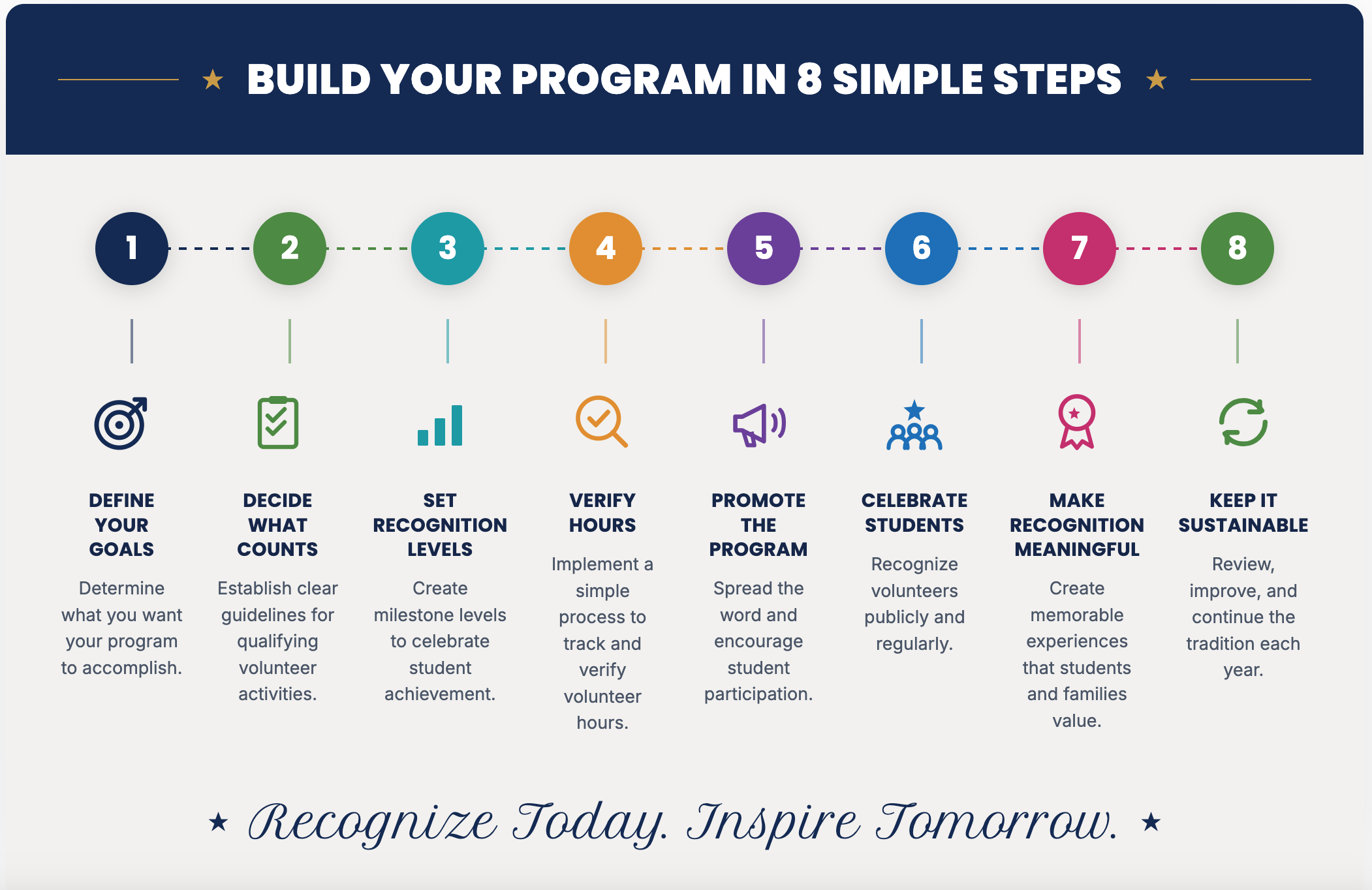
Step 1: Define Your Goals
Before launching a recognition program, decide what you hope to accomplish.
Ask yourself:
- Do you want to encourage more students to volunteer?
- Do you want to recognize students who consistently serve their community?
- Are you looking to highlight leadership and civic engagement?
- Do you want to build a stronger culture of service throughout your school?
Your goals will help determine how your program is structured and what types of recognition you offer.
Step 3: Establish Recognition Levels
One of the easiest ways to keep students motivated is by recognizing milestones rather than waiting until graduation.
For example, you might recognize students who complete:
- 25 volunteer hours
- 50 volunteer hours
- 100 volunteer hours
- 250 volunteer hours
- 500+ volunteer hours
Celebrating progress throughout the year gives students something to work toward and encourages continued involvement.
Step 3: Establish Recognition Levels
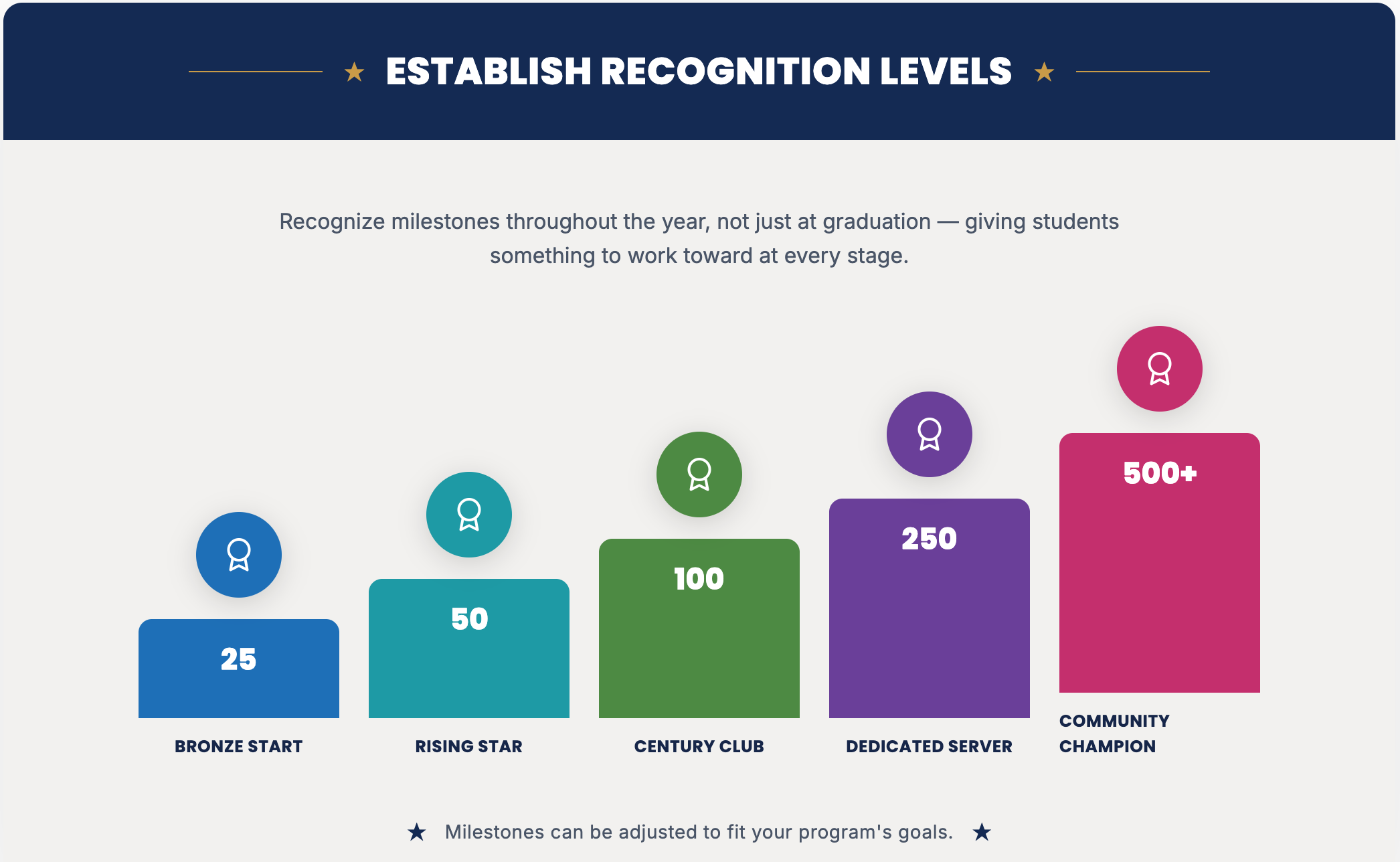
One of the easiest ways to keep students motivated is by recognizing milestones rather than waiting until graduation.
For example, you might recognize students who complete:
- 25 volunteer hours
- 50 volunteer hours
- 100 volunteer hours
- 250 volunteer hours
- 500+ volunteer hours
Celebrating progress throughout the year gives students something to work toward and encourages continued involvement.
Step 4: Create a Simple Hour Verification Process
A successful recognition program depends on accurate record keeping.
Schools can verify volunteer hours through:
- Signed volunteer logs
- Letters from nonprofit organizations
- Digital hour tracking platforms
- Advisor approval
- Event attendance records
Keeping the process simple makes it easier for both students and administrators.
Step 5: Promote the Program
Students can’t participate if they don’t know the program exists.
Spread the word by:
- Introducing the program during student orientation
- Sharing updates in school newsletters
- Posting on social media
- Including information on your school’s website
- Asking teachers and club advisors to encourage participation
- Recognizing volunteers during assemblies and announcements
The more visible the program becomes, the more students will want to be involved.
Step 6: Celebrate Students Publicly
Recognition is one of the strongest motivators for continued service.
Consider celebrating volunteers through:
- Awards ceremonies
- School announcements
- Social media spotlights
- Certificates
- Recognition pins
- Honor cords or graduation recognition
- Local newspaper articles
- Volunteer appreciation events
Public recognition not only honors students but also inspires others to serve.
Step 7: Make Recognition Meaningful
Students invest significant time serving others. Their recognition should reflect that commitment.
Instead of simply handing out a certificate, create an experience that students will remember. Invite families to an awards ceremony, recognize students during a school assembly, or present awards during graduation or an honor society induction.
Meaningful recognition reinforces the value of service and helps students take pride in their accomplishments.
Step 8: Keep the Program Sustainable
The best volunteer recognition programs become annual traditions.
At the end of each school year:
- Review participation numbers.
- Gather feedback from students and staff.
- Update guidelines if needed.
- Celebrate success stories.
- Begin promoting the next year’s program early.
Over time, your recognition program can become part of your school’s identity and encourage a lasting culture of service.
Why Recognition Matters
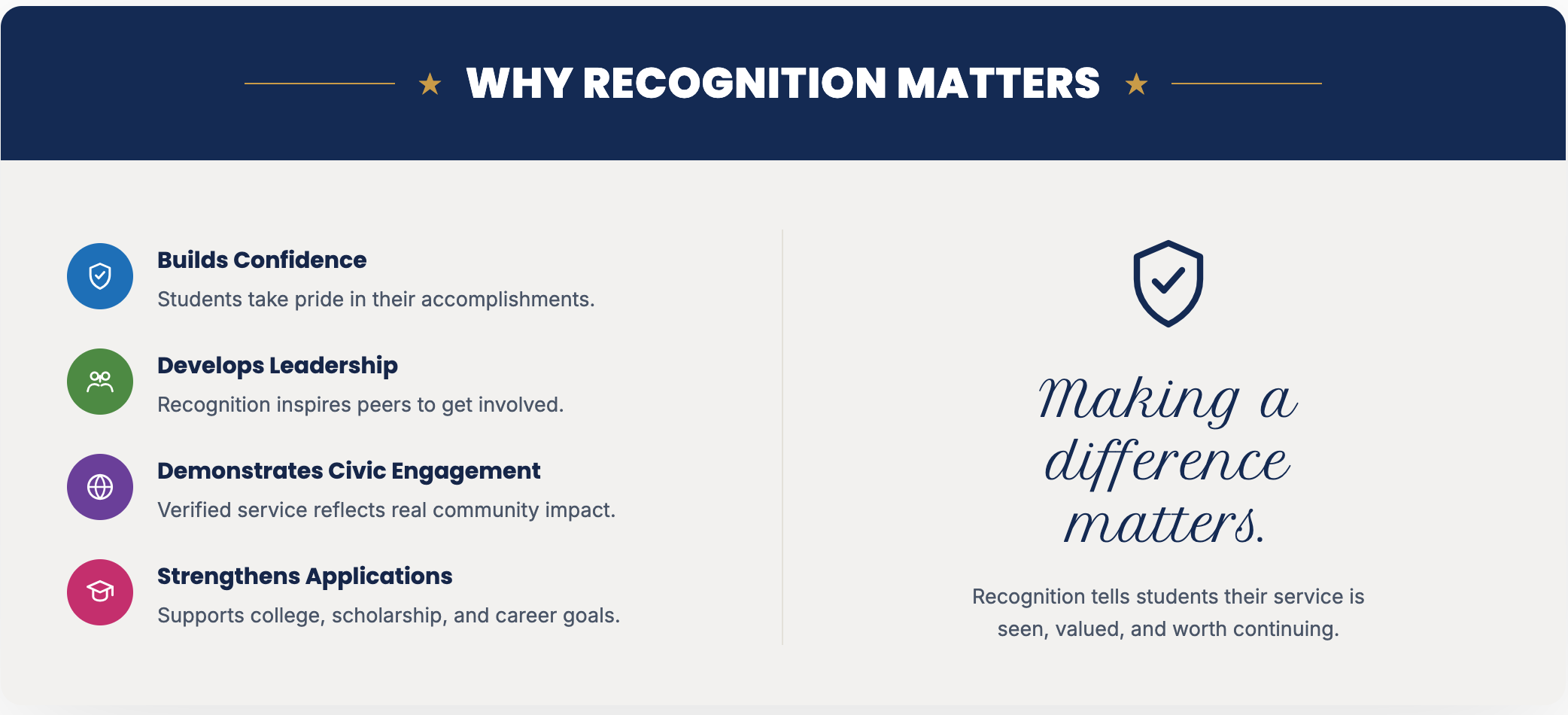
Volunteer recognition is about more than celebrating completed hours.
When students know their efforts are valued, they are more likely to continue volunteering, develop leadership skills, and inspire their peers to become involved. Recognition also helps students build confidence while demonstrating civic engagement that can strengthen college, scholarship, and career applications.
Most importantly, recognizing service sends a powerful message: making a difference matters.
Let the National Service Honor Do the Heavy Lifting
If you’re looking for an easy way to recognize student volunteers, the National Service Honor provides a ready-made solution for schools, nonprofits, and community organizations.
The program recognizes verified volunteer service through nationally recognized award levels, making it simple to celebrate students who go above and beyond in serving their communities.
Recipients receive:
- An official National Service Honor certificate
- A personalized recognition letter
- A Bronze, Silver, or Gold recognition pin based on their achievement level
Rather than creating awards from scratch, schools can provide students with meaningful recognition that reflects the time, dedication, and impact of their service.
Every School Can Build a Culture of Service
Starting a volunteer recognition program doesn’t require a large budget or a dedicated staff. With clear expectations, consistent tracking, and meaningful recognition, any school can create a program that encourages students to serve their communities year after year.
The greatest programs don’t just recognize volunteer hours—they celebrate compassion, leadership, and the students who choose to make a difference. By investing in volunteer recognition, schools invest in the next generation of community leaders.